


Atmospheric River Workshop
Event Location: Virtual
April 22-23, 2025
11AM – 5PM EDT
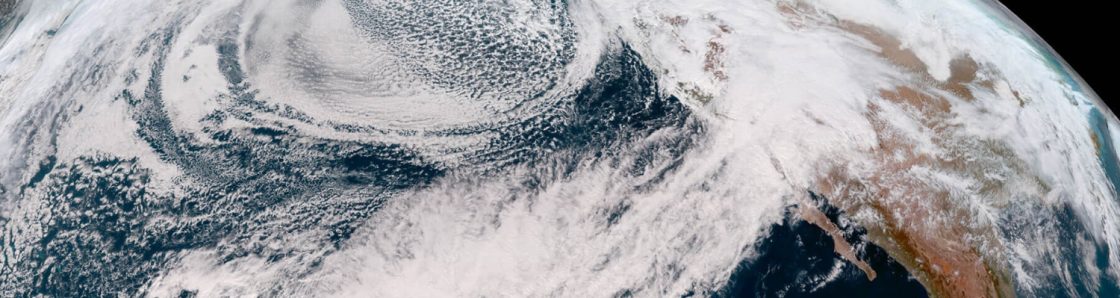
This invite-only, virtual event is a two-day Atmospheric River (AR) workshop that will include presentations from the Earth Prediction Innovation Center (EPIC), Global Systems Laboratory (GSL), Physical Sciences Laboratory (PSL), Weather Program Office (WPO), Environmental Modeling Center (EMC), Weather Prediction Center (WPC), National Weather Service (NWS), Center for Western Weather and Water Extremes (CW3E), Cooperative Institute for Research to Operations in Hydrology (CIROH) and others to highlight recent advances and future work in AR science, modeling, forecasting, impacts and more. The workshop will also include running applications such as GraphCast, FourCastNetv2, and PanguWeather for an AR event impacting the United States west coast.
Atmospheric River (AR) Workshop Recap
The 2025 Atmospheric River (AR) Workshop brought together researchers, forecasters, and model developers from the Earth Prediction Innovation Center (EPIC), Global Systems Laboratory (GSL), Physical Sciences Laboratory (PSL), Office of Modeling and Development (OMD), Weather Prediction Center (WPC), Center for Western Weather and Water Extremes (CW3E), Cooperative Institute for Research to Operations in Hydrology (CIROH) and partner organizations to discuss recent advances in atmospheric river (AR) prediction, modeling, data assimilation (DA), machine learning (ML), verification, and operational applications.
The workshop highlighted progress across the UFS-AR project and related forecasting systems, including developments in AR modeling, DA frameworks, model verification and validation, AI/ML-enabled prediction techniques, and hydrologic applications supporting water-resource management and reservoir operations. Participants also shared research on forecasting extreme precipitation events, improving the use of observational data, and advancing next-generation modeling systems and workflows.
A major focus of the workshop was the transition of research capabilities into operational forecasting environments, including discussions on emerging modeling frameworks, community-accessible workflows, containerized applications, and future directions for AR prediction. Sessions explored ML applications for precipitation forecasting, DA, and hydrologic prediction, as well as the role of AR forecasts in decision support for water management and hazard preparedness.
The workshop concluded with breakout discussions focused on DA, modeling system evolution, and operational implementation strategies, providing participants with an opportunity to identify future research priorities and strengthen collaboration across the AR research and operations community.
Session Feedback:
Data Assimilation
Participants emphasized the importance of continued investment in JEDI-based DA capabilities while recognizing the need to further mature and optimize these systems to support future operational forecasting requirements.
AR Focused Modeling Improvements
Participants highlighted the importance of reducing redundancy across modeling systems, strengthening model evaluation frameworks, and focusing development efforts on approaches that maximize forecast improvements for AR prediction.
Workshop Demo
The AI-AR demonstration, utilizing a Google Colab notebook, showcased the use of GraphCast, an AI-based weather prediction model, to forecast and analyze a U.S. West Coast atmospheric river event within a cloud-based training environment. The hands-on exercise familiarized participants with AI forecasting workflows, model execution, and visualization of atmospheric river impacts.
Update as of March 2026:
The Atmospheric River Analysis and Forecast System, or AR-AFS, is now running in experimental mode. Click here for more information.
Agenda/Workshop Schedule
Day 1 - Tuesday, April 22nd
10:45 AM – Google Meet Sign in
11:00 AM – Welcome and Opening Remarks
11:10 AM – Session 1: AR system overview and impacts + Other stakeholder conversations
11:10 AM – WPO: Perception, response, and impact, a cross-science perspective
11:25 AM – EMC: Assessment of 2023 Extreme Precipitation Events on the U.S. West Coast Using AR-AFS
11:55 AM – Break
12:10 PM – Session 2: Advances in Data Assimilation
12:10 PM – Data Assimilation for AR Prediction
12:25 PM – JEDI-inline DA
12:40 PM – Machine learning for data assimilation
1:00 PM – Lunch Break
2:00 PM – Session 3: Enhanced AR prediction with ML techniques
2:00 PM – CW3E’s AI and ML R&D to improve QPF and prediction of ARs
2:15 PM – Development of the nested AI model
2:30 PM – CIROH: Deep learning ensemble predictions of forcings for hydrological modeling
2:45 PM – GSL: Development of a Data-Driven Convection-Allowing Model
3:05 PM – Advancements in UFS S2S Modeling: Improving Tropical Variability and Its Impact on Atmospheric River Prediction
3:20 PM – Break
3:30 PM – Session 4: EPIC AI for AR Demonstration
5:00 PM – Closing
Day 2 - Wednesday, April 23rd
10:45 AM – Google Meet Sign in
11:00 AM – Welcome; Recap of Day 1; Preview of Day 2
11:10 AM – Session 5: Advances in Modeling/Research
11:10 AM – Modeling system advancements for AR applications
11:25 AM – CW3E: SABL research
11:40 AM – CW3E: West-WRF ensemble
12:00 PM – Break
12:15 PM – Session 6: Model Verification and Validation
12:15 PM – Case studies of AR events
12:30 PM – Application of MATS interactive verification
12:45 PM – PEAR Highlights and AR QPF Verification
1:00 PM – Improving predictability of AR-related extreme precipitation in California through ensemble processing
1:15 PM – Lunch Break
2:00 PM – Session 7: Break out sessions
2:00 PM – DA and transition from GSI to JEDI
2:00 PM – Modeling and transition from FV3 to MPAS
2:00 PM – EMC AR-AFS – options for CCPP based physics configurations & Ocean Coupling
3:15 PM – Break
3:30 PM – Reconvene with break out session notes read out
5:00 PM – Closing
Registration
Forum: Online/Virtual
| Time (MST) | Content | Content | Content link | Presenter |
| 8:00AM - 10:00AM |
Running Graphcast/ FourCastNetv2/ PanguWeather |
This notebook will go over running the AI models that have the greatest traction right now in industry. | GitHub - NOAA-GSL/ai-notebooks | Keven/Mariah/Raghav |
| 10:00AM - 12:00 PM |
Anemoi Framework | A mono-repo containing core training and modelling functionality for Anemoi, providing the packages anemoi-training, anemoi-models, and anemoi-graphs. | GitHub - ecmwf/anemoi-core: Core packages for Anemoi. | Mariah/Raghav |
| 12:00PM - 1:00PM |
LUNCH | LUNCH | ||
| 1:00PM - 3:00PM |
Special Guest | Special Guest | Special Guest | |
| 3:00PM - 4:00PM |
Special Guest | Special Guest | Special Guest |
Instructors:
- Alex Burrows
- Mark Potts
