


Forecasting Made Accessible: AI Weather Models on Google Colab

Dr. Jacob Radford (GSL/CIRA) has done an outstanding job creating a comprehensive series of Google Colab notebooks that enable users to run Artificial Intelligence (AI) Weather Prediction (AIWP) models using free resources. The flagship notebook, Running_AIWP.ipynb – Colab, provides an in-depth overview of AIWP models, including how to assess forecast accuracy and the overall run time of these models. Building on the foundational work of the European Centre for Medium-Range Weather Forecasts (ECMWF)’s ai-models Python package, Dr. Radford meticulously guides users through various models such as FourcastNet, Pangu-weather, Graphcast, and Aurora, offering an interactive tutorial to execute them on Google Colab. With an estimated run time of 70 minutes, this resource is a testament to Dr. Radford’s dedication to advancing innovative approaches in scalable AIWP.
HAFS Forecasts Contribute to More Effective Emergency Response
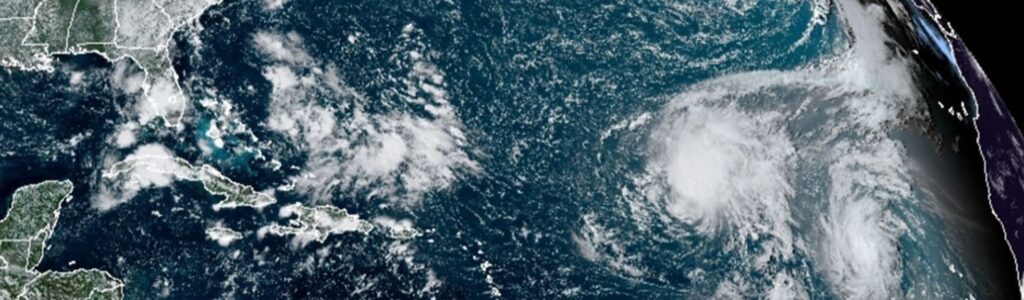
Modeling is an essential component of NOAA’s services and capabilities value chain. The NOAA Modeling Strategy (2024) provides a 10-year framework to advance cutting-edge research, development, and operational implementation activities for all modeling that is foundational to NOAA’s science and service missions. This strategy positions NOAA to be the global leader in Earth System Modeling as set forth under the principles of the Earth Prediction Innovation Center (EPIC) and the Unified Forecast System (UFS) to implement open-source and community modeling approaches to increase collaboration with the broader community where possible.
Artificial Intelligence in Weather Modeling Workshop

The Earth Prediction Innovation Center (EPIC) invites you to a one-day Artificial Intelligence (AI) in Weather Modeling Workshop on June 27, 2025. This virtual event will explore cutting-edge AI applications in numerical weather prediction (NWP), featuring hands-on demonstrations of GraphCast, FourCastNetv2, and PanguWeather, as well as an introduction to the European Centre for Medium-Range Weather Forecasts (ECMWF) Anemoi Core framework.
UFS Short-Range Weather (SRW) Application v3.0.0 Release

The Earth Prediction Innovation Center (EPIC) and the Unified Forecast System (UFS) community are proud to announce the public release of the Short-Range Weather (SRW) Application (App) v3.0.0, more information is available via the EPIC SRW Get Code page. This release is an update to the v2.2.0 release from October 2023 and incorporates a number of changes currently available in the SRW App develop branch, including significant enhancements to the SRW App’s ability to to simulate smoke, dust, and two-way coupled fire-atmosphere interactions.
CADRE-EPIC Data Assimilation Training
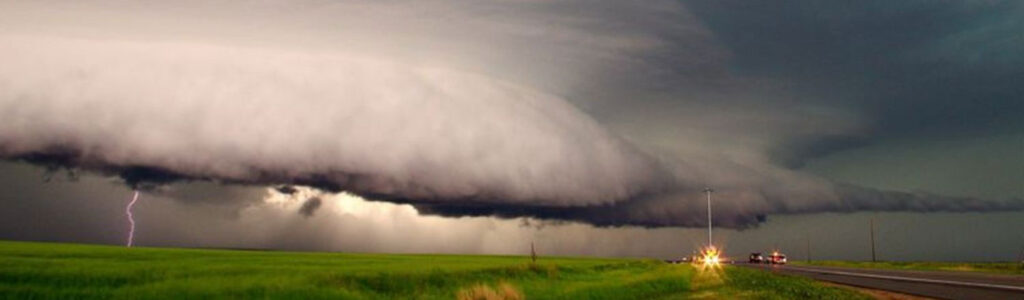
The Consortium for Advanced Data Assimilation Research and Education (CADRE), in partnership with the NOAA Earth Prediction Innovation Center (EPIC), will host a data assimilation training event on June 4-6, 2025, at the Colorado State University.
EPIC’s Code Management Team Implements Automated Jenkins Pipeline for CI/CD in NOAA PSL Stochastic Physics Repository

The EPIC Code Management team has successfully developed and integrated a new automated Jenkins pipeline for unit testing code changes in the NOAA Physical Sciences Laboratory (PSL) Stochastic Physics repository. This pipeline streamlines the software development lifecycle by enabling Continuous Integration (CI), Continuous Delivery (CD), and Continuous Deployment (CD) through an efficient, automated process. By simply adding a GitHub label to a pull request, EPIC Code Managers can now trigger unit tests and seamlessly progress through the CI/CD pipeline.
RTX Annual and Quarterly Engineering Award Winners
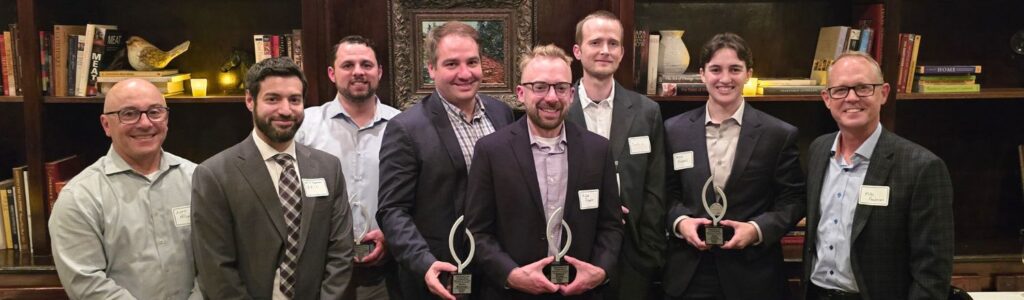
Raytheon’s engineering excellence has played a pivotal role in transforming Earth system modeling through NOAA’s Earth Prediction Innovation Center (EPIC). By implementing cutting-edge methodologies, the EPIC team has driven a 700% increase in model releases, a 1,900% growth in research members, and a 1,700% reduction in peer-review times, accelerating advancements in weather forecasting and disaster preparedness.
In recognition of their outstanding contributions, the EPIC team—including Keven Blackman, Aaron Jones, Anna Kimball, Edward Snyder, and Zachary Shrader—has been honored with the prestigious John Cassidy Award. Their efforts in developing a first-of-its-kind continuous integration and deployment pipeline have positioned NOAA as a leader in open-source Earth system modeling, fostering unprecedented collaboration across government, industry, and academia
NOAA Releases 10-Year Strategy for Data Assimilation

In environmental analysis and prediction, data assimilation (DA) is the process that combines observations with model data to produce a best estimate of the Earth system state at a given time, also known as the analysis. DA systems are critical to providing analyses both for nowcasting and situational awareness, as well as for the initialization of numerical weather prediction (NWP) and Artificial Intelligence-based (AI) forecast systems. As significant as advances in DA capabilities has been over recent decades, such as expanding the types of observations assimilated and the environmental phenomena observed, many challenges still exist. For example, the volume of data assimilated is a small percentage of data provided across the Earth global observing system; DA algorithms, constraints, and assumptions, in some cases, limit the information content extracted from observations; and gaps in DA-related subject matter expertise inhibit innovation from advancing DA capabilities. Concurrently, the global observing system for environmental observations is growing, and becoming more complex. Data volumes are increasing rapidly, as are the types of observing systems, and this trend is expected to continue over the next decade. In addition, the need for accurate, continuous environmental information is growing across both private and public sectors.
EPIC Advances Weather Innovation and Collaboration at the 105th AMS Annual Meeting

The Earth Prediction Innovation Center (EPIC) participated in the 105th American Meteorological Society (AMS) Annual Meeting from January 12–16, 2025, in New Orleans, LA, in several impactful ways. The Annual Meeting provides a forum for the community to share ideas and experiences on the research and development of Earth system models and their applications in operational forecasting. EPIC’s participation at AMS also fostered collaboration to support the Unified Forecast System (UFS) community.
EPIC Contract Team and Jennifer Vogt Recognized for Excellence in Stakeholder Engagement
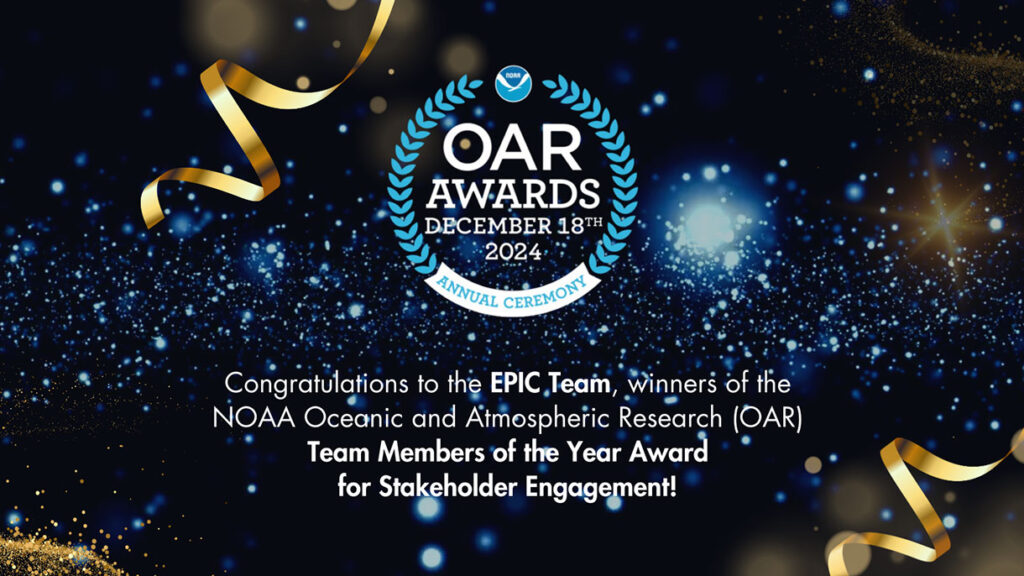
The EPIC contract team has been honored with the prestigious NOAA Oceanic and Atmospheric Research (OAR) Team Members of the Year Award for their exceptional contributions to stakeholder engagement. This recognition highlights the team’s efforts in establishing the virtual Earth Prediction Innovation Center (EPIC), a vital platform created to enhance collaboration between NOAA and external communities to improve the nation’s weather forecast system. The EPIC Team’s work has set a new standard for community engagement, fostering innovation that contributes to advancing forecasting systems and inclusive research environments.
